The Afternoon Is Gone
— t r a b o c c o
There is a moment when music begins to climb, and something in you rises with it. Not the body, not quite the heart, but something that has been waiting beneath them both. The mind grows quiet. Thoughts fall away like fingers coming to rest upon a table, and suddenly... there is nothing left to think about.
There is only the rising.
To speak of the past is to reach into an open furnace with bare hands; and still, we try to shape the fire.
Hold the memory firm; the years, they fall away like ash.
And you are young.
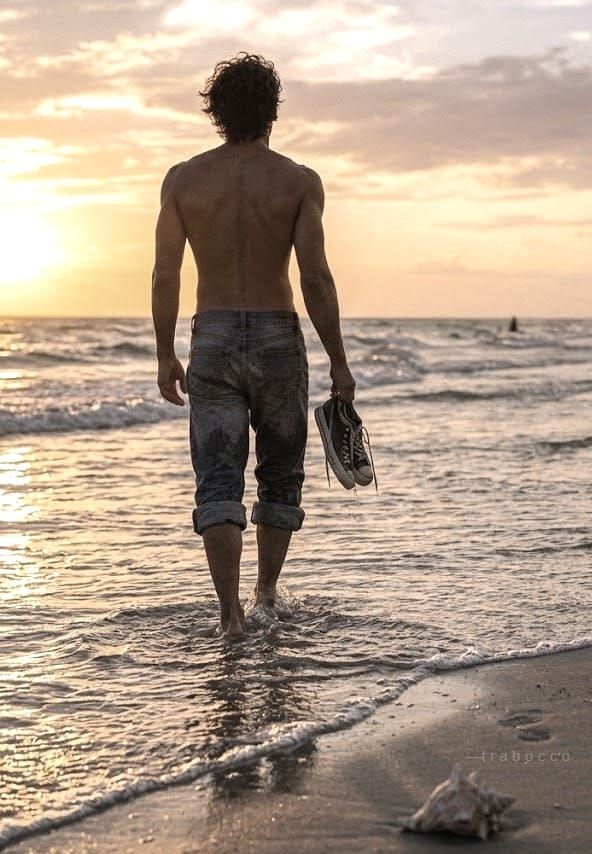
The water is over your ankles. The sun is warm upon your shoulders. And the waves, they come and go; the sand gives beneath your feet, sinking an inch into the quiet as the water holds your weight, and the whole world, for a brief moment, belongs to you.
The skin glows. A sea of people lift and fall in the palm of the wave. And time, it seems, can become so still that it reflects the light we thought we left behind.
Patience is only the shore agreeing to hold what the water cannot keep. A long, slow suspension where the tide forgets to turn, and the mind asks nothing more of the afternoon.
There is a madness to that age.
The laughter that bends you in half. The magnificent foolishness of dreams so enormous that only youth could believe them possible. The body is strong without knowing strength. The mind is agile without knowing thought. You love without measuring, run without wondering whether you can, and wake each morning with a life so full of possibility that you hardly notice its abundance.
And you know the idea of yourself.
Not as someone you must become, but as someone who has never thought to be otherwise.
You are not seeking happiness. You are living inside it.
And then, somehow, thirty years have passed.
And there is the pain.
Not simply of growing older, but of knowing that no force in creation can return you to that particular afternoon. Not another lifetime, not another body, not even the impossible mercy of beginning again. That young man, with the sun upon his face and the entire world before him, existed once.
What we miss was more than just the salt on our skin. It was the clean, unbroken weight of an intact life; long before the first seam gave, when a mother’s hand seemed eternal... before we learned what things cost to lose.
Nothing we say can reach it.
Language was only ever kindling thrown against a passing sun; leaving us to grasp at smoke, hoping to find our way back to the burn.
But you loved him.
Perhaps that is the terrible beauty of it. You loved being yourself so completely that the passing of time feels almost like losing someone.
Until time closes around the wound and makes of the loss its own quiet pearl.
And the man can finally appreciate the boy.
Time.
It is the only gift that age knows how to bring:
the shell carries the sound of the ocean long after it leaves the tide.
And the water washes back and forth in signal and soul.
But then the music climbs again.
And something extraordinary happens.
You remember the water, and you can feel it. You remember the laughter, and something in your chest opens. You remember that astonishing freedom, and suddenly you understand.
My God. I lived it.
I was there. I was the one laughing, the one running into the ocean, the one foolish enough to believe that life would give me everything.
And it did.
For an afternoon, for a summer, for an entire glorious stretch of being alive, it gave me exactly that.
And here I am.
The body has changed. The years have passed. The afternoon is gone.
But the one who loved it?
He is here.
He is the one listening to the music now.
Nothing was taken that did not turn into this.
Time was never the ocean to survive, but the self we would come to know.
And suddenly there is no need to go back. No need to recover the young man or mourn the years between us. He has not been waiting somewhere in the past for me to find him.
He has been living every moment since.
The music climbs.
And I rise with it.
— t r a b o c c o